• White-Label WordPress Development in India: How Agencies Can Scale Without Hiring In-House

    White-Label WordPress Development in India: How Agencies Can Scale Without Hiring In-House

    For many digital agencies, growth creates a difficult problem.

    You want to take on more projects, serve clients faster, and increase revenue. But every new website, landing page, redesign, maintenance request, or WordPress fix adds pressure to your internal team. Designers get stretched. Developers get overloaded. Project managers spend more time chasing updates. Deadlines become tighter. Quality becomes harder to protect.

    At that point, the question becomes simple: should your agency hire more people in-house, keep relying on freelancers, or work with a dependable white-label WordPress development partner in India?

    For many agencies in the USA, UK, Australia, Canada, and other global markets, white-label WordPress development offers a practical middle path. You get additional production capacity without the overhead of permanent hiring. You keep your client relationships intact. Your agency remains the face of the work. And behind the scenes, a skilled India-based WordPress team helps you deliver more projects with less stress.

    This guide explains how white-label WordPress development works, why agencies use it, what to look for in a partner, and how it can help your agency scale without building a larger in-house development department too soon.

    What Is White-Label WordPress Development?

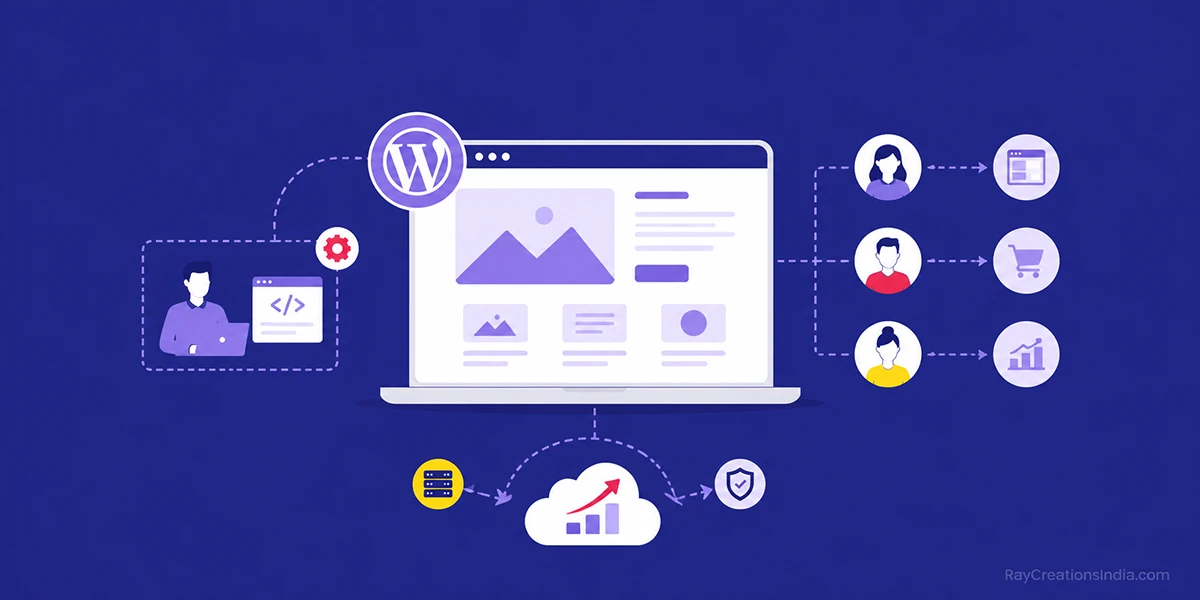
    White-label WordPress development means your agency outsources WordPress design implementation, development, fixes, maintenance, or technical delivery to another team, while the work is delivered under your agency’s brand.

    Your client does not need to know that another team is involved unless you want them to. The white-label partner stays behind the scenes, follows your process, and helps you deliver the work as if it came from your own internal department.

    This model is common among:

    • digital marketing agencies
    • SEO agencies
    • branding studios
    • design agencies
    • freelance consultants with growing client loads
    • small agencies that do not want to hire full-time developers yet

    The key point is that white-label development protects your client relationship. You sell the project, manage the account, and remain the strategic partner. Your development team in India quietly helps with production, implementation, QA, and technical support.

    Why Agencies Reach a Scaling Bottleneck

    Most agencies do not struggle because they cannot sell. They struggle because delivery becomes harder as sales improve.

    At first, a small internal team can handle the workload. A few websites per month feel manageable. A landing page here, a redesign there, some support tasks, a few WordPress fixes — everything moves.

    Then growth begins.

    A few retained clients ask for ongoing changes. A new client needs a quick campaign landing page. Another client’s WordPress site breaks after a plugin update. A designer has completed layouts, but development is backed up. Meanwhile, a promising prospect wants a fast proposal and a realistic launch date.

    This is where agency owners often feel trapped. They have demand, but not enough reliable delivery capacity.

    Hiring in-house may sound like the obvious answer, but it is not always practical. Recruitment takes time. Salaries are fixed costs. Good developers are expensive. Managing a larger team requires more operational structure. And if project volume fluctuates, your agency may end up either overloaded or carrying unused capacity.

    White-label WordPress development gives agencies a more flexible way to grow.

    Why Agencies Choose White-Label WordPress Development in India

    India has become a natural destination for web design and development outsourcing because of its combination of technical talent, cost efficiency, and global project experience. But the best reason to choose a white-label WordPress development company in India is not simply “lower cost.”

    The real advantage is better delivery leverage.

    A skilled India-based partner can help your agency:

    • take on more WordPress projects without hiring immediately
    • keep fixed payroll lower
    • improve turnaround time during busy periods
    • protect project margins
    • offer development services even if your core team is design, SEO, or strategy-focused
    • provide ongoing maintenance and small-task support under your brand

    For agencies serving Western markets, this can create a strong commercial advantage. Your clients receive professional work. Your agency keeps control of communication and strategy. Your partner handles the execution that would otherwise slow the team down.

    Done well, white-label development is not “outsourcing chaos.” It is structured capacity.

    What Work Can Be White-Labeled?

    White-label WordPress development can cover much more than full website builds. In fact, many agencies begin with smaller technical tasks before moving into larger projects.

    Common white-label WordPress services include:

    • custom WordPress website builds
    • Figma to WordPress implementation
    • Gutenberg/block-based theme development
    • Elementor or page builder implementation when required
    • landing page development for SEO or paid campaigns
    • WooCommerce setup and improvements
    • website redesign implementation
    • speed optimization and Core Web Vitals improvements
    • plugin conflict fixes
    • broken layout repairs
    • form setup and troubleshooting
    • ongoing WordPress maintenance
    • backups, updates, and security support
    • monthly retainers for small client tasks

    This flexibility is one of the reasons agencies like the model. You do not need to outsource everything. You can start with one part of your delivery workflow and expand only when the relationship proves itself.

    White-Label Is Not the Same as Hiring Random Freelancers

    Many agencies have tried freelancers before. Some experiences are good. Others are frustrating.

    Freelancers can be excellent for specific tasks, but agency delivery often needs more than technical ability. It needs process, documentation, communication, availability, QA, confidentiality, and consistency.

    A freelancer may disappear during a busy week. A project may depend too heavily on one person. Documentation may be thin. The agency may spend more time managing the work than expected.

    A proper white-label WordPress development partner should operate differently.

    The relationship should feel like an extension of your agency’s delivery system. That means clear scopes, defined milestones, communication rhythm, testing standards, and reliable handoffs. You are not just buying development hours. You are adding a delivery engine behind your brand.

    How White-Label Development Helps Agencies Scale

    The biggest benefit of white-label WordPress development is that it allows your agency to increase delivery capacity without taking on all the risk of hiring.

    You can say yes to more work

    When your internal team is at capacity, new opportunities become stressful. You may delay proposals, push timelines, or reject work that would otherwise be profitable.

    A white-label partner gives you extra bandwidth. That means your agency can accept more projects without instantly creating internal overload.

    You can protect your margins

    Hiring locally in Western markets can be expensive, especially when you need experienced WordPress developers. By working with a capable development partner in India, agencies can often maintain healthier margins while still delivering quality work.

    The goal is not to race to the cheapest provider. The goal is to create a sustainable cost-to-quality ratio that allows your agency to grow profitably.

    You can focus on strategy and client relationships

    Many agency owners are strongest at sales, strategy, creative direction, client communication, or marketing. But as the agency grows, they get pulled into delivery bottlenecks.

    White-label support allows your team to spend more energy on what clients actually see: strategy, communication, planning, reporting, and relationship management.

    You can offer services beyond your internal skill set

    A branding agency may not want to hire a WordPress team. An SEO agency may not want to build landing pages internally. A paid ads agency may not want to manage web development staff.

    White-label WordPress development lets these agencies offer website-related services without building a full technical department.

    You can smooth out busy seasons

    Agency workloads are rarely perfectly stable. Some months are quiet. Other months bring multiple launches, urgent updates, and campaign deadlines at the same time.

    A white-label partner gives you flexible support during peaks without forcing you into permanent hiring decisions too early.

    What a Good White-Label Workflow Looks Like

    White-label relationships work best when there is a clear operating rhythm.

    The exact workflow can vary from agency to agency, but a professional process usually includes the following stages.

    1. Scope and requirements

    Before development begins, both sides should understand what is being built. This may include page lists, design files, functionality requirements, plugin preferences, content status, deadlines, and launch expectations.

    Clear scope prevents confusion later.

    2. Access and assets

    The agency provides the necessary assets: design files, brand guidelines, copy, images, hosting details, WordPress access, plugin licenses, or client-specific requirements.

    A good white-label partner will usually have a kickoff checklist so nothing important is missed.

    3. Staging development

    Work should typically happen on a staging site, not directly on the live client site unless the task is small and safe.

    This protects the client’s existing website and allows the agency to review progress before anything goes public.

    4. Milestone updates

    Agencies should not have to wonder what is happening. Regular progress updates help project managers stay confident and keep clients informed.

    Updates do not need to be excessive, but they should be predictable.

    5. QA and testing

    Quality assurance is where a strong white-label partner protects your agency’s reputation.

    Testing should include mobile responsiveness, browser checks, forms, links, navigation, core layouts, basic speed checks, and content accuracy. The goal is to reduce avoidable issues before handoff.

    6. Handoff and documentation

    Once the build is complete, the agency should receive a clean handoff. This may include admin notes, plugin information, staging/live URLs, launch checklist items, or short walkthroughs where helpful.

    Good documentation makes your agency look organized and professional.

    What to Look for in a White-Label WordPress Development Partner

    Choosing the right partner matters. A poor white-label relationship creates more stress than it removes.

    Here are some qualities agencies should look for.

    Confidentiality and brand protection

    A white-label partner should understand boundaries. They should not contact your clients directly unless instructed. They should not claim credit publicly. They should be comfortable with NDAs and confidentiality expectations.

    Your client relationship must remain protected.

    WordPress specialization

    General development knowledge is useful, but WordPress has its own ecosystem. A strong partner should understand themes, plugins, custom post types, Gutenberg, WooCommerce, performance optimization, hosting considerations, and maintenance workflows.

    Communication discipline

    Communication is often where outsourcing succeeds or fails.

    A good partner should be comfortable working through your preferred channels, whether that is email, Slack, Trello, ClickUp, Asana, Basecamp, or another project management tool. They should give clear updates, raise blockers early, and avoid vague responses.

    Quality assurance mindset

    Your white-label partner’s work reflects on your agency. That means QA cannot be casual.

    Look for a team that checks responsive behavior, browser basics, forms, layout consistency, and obvious technical issues before sending work back.

    Long-term reliability

    White-label partnerships become more valuable over time because the partner learns your standards, preferences, clients, and workflow.

    It is usually better to choose a dependable long-term team than to constantly hunt for the cheapest short-term option.

    Common Mistakes Agencies Make When Outsourcing Development

    White-label development can be extremely effective, but agencies still need to manage it intelligently.

    One common mistake is outsourcing without a clear brief. If the design files are incomplete, content is missing, or expectations are vague, the project will suffer no matter how good the development team is.

    Another mistake is choosing purely on price. Very low pricing may look attractive at first, but it often creates hidden costs: missed deadlines, poor code, weak QA, rework, or client dissatisfaction.

    Some agencies also fail to define communication rules. If nobody knows when updates happen, where tasks are tracked, or who approves changes, projects become messy.

    Finally, agencies sometimes wait until they are already overwhelmed before looking for help. A better approach is to test a white-label partner with a small project before your agency desperately needs capacity.

    How to Start with a White-Label Partner Safely

    The best way to begin is not usually with your most complex client project.

    Start with a controlled, low-risk task such as:

    • a single landing page
    • a small WordPress fix
    • a Figma to WordPress inner page
    • speed cleanup on a non-critical site
    • a maintenance task for an existing client
    • a small website build with clear scope

    This gives both sides a chance to understand working style, communication, quality expectations, and turnaround.

    If the first project goes well, you can gradually move into larger builds, retainers, or dedicated support.

    Why White-Label WordPress Development Works Well for Agencies Serving Small Businesses

    Many agencies serve small to mid-sized businesses that need professional websites but cannot afford enterprise agency pricing. These clients still expect good design, clean functionality, fast communication, and ongoing support.

    That can be difficult to deliver profitably if all production is handled in-house at high local costs.

    White-label WordPress development in India helps agencies serve this market more effectively. You can offer polished WordPress websites, landing pages, WooCommerce improvements, and maintenance services at prices that still make sense for your agency and your clients.

    This creates a stronger business model. Your agency can remain lean, profitable, and responsive while still expanding service capacity.

    How Ray Creations India Supports Agencies

    Ray Creations India works with agencies that need dependable web design and WordPress development support behind the scenes.

    The goal is simple: help your agency deliver more client work without adding unnecessary overhead, hiring pressure, or delivery stress.

    Depending on your needs, white-label support can include WordPress builds, Figma to WordPress implementation, landing pages, WooCommerce support, maintenance tasks, troubleshooting, and ongoing development help. The engagement can be project-based, retainer-based, or structured around a more dedicated development rhythm.

    For agencies, the most important part is confidence. You need to know that your partner understands confidentiality, communication, QA, deadlines, and the fact that your reputation is always on the line.

    A strong white-label partner should not create more management work for you. It should reduce pressure and make your agency feel more capable.

    White-Label Development Is Really About Freedom

    The best agencies do not scale by doing everything themselves forever. They scale by knowing what to keep close and what to delegate wisely.

    Client relationships, strategy, creative direction, and account leadership may remain at the heart of your agency. But production and technical delivery can often be supported by a trusted partner working quietly in the background.

    That is what makes white-label WordPress development so valuable. It gives your agency freedom:

    • freedom to accept more projects
    • freedom to avoid rushed hiring
    • freedom to protect margins
    • freedom to serve clients better
    • freedom to focus on growth instead of constant delivery bottlenecks

    If your agency is reaching the point where opportunity is growing faster than your internal capacity, white-label WordPress development in India may be the practical next step.

    You do not need to build a large in-house team before you scale. You need the right delivery partner behind you.

    If your agency is juggling too many builds, landing pages, fixes, or maintenance tasks, Ray Creations India can help you add dependable white-label WordPress development capacity without hiring in-house.
  • Website Maintenance Services: What’s Included and Why It’s Critical for Your Business

    Website Maintenance Services: What’s Included and Why It’s Critical for Your Business

    For many businesses, a website launch feels like the finish line.

    The design is approved, the pages are live, the contact form works, and everyone breathes a little easier. The website is “done.” Attention shifts back to sales, operations, client work, and everything else demanding daily focus.

    That is exactly where trouble often begins.

    A business website is not a brochure you print once and forget. It is a living business asset. It runs on software, plugins, themes, hosting environments, forms, integrations, and content that all need some level of attention over time. Left alone for too long, even a well-built website can start becoming slower, less secure, harder to update, and less effective at turning visitors into enquiries.

    That is why website maintenance services matter so much. They are not just a technical add-on for large companies. They are a practical necessity for almost any serious business that depends on its website for trust, lead generation, visibility, and day-to-day credibility.

    If you are a business owner, founder, or marketing decision-maker, this guide will help you understand what website maintenance services usually include, why they matter more than many people realize, and how proper maintenance protects your business long after launch.

    A Website Does Not Have to Break Completely to Start Hurting Your Business

    One of the biggest misconceptions around maintenance is the idea that action is only needed when something goes obviously wrong.

    That is rarely how websites decline.

    More often, the damage happens quietly. A plugin becomes outdated. A theme update is postponed. Backups are not checked. Images pile up unoptimized. Broken links accumulate. Spam starts slipping through forms. The site gets a little slower, a little messier, and a little riskier. Nothing dramatic happens right away, so the issue remains invisible.

    Then one day, a business notices one of the symptoms:

    • Enquiries have dropped
    • The site feels slow on mobile
    • Forms are not being delivered properly
    • Pages look broken after an update
    • Suspicious spam pages appear in search
    • The site goes down at the worst possible time

    At that stage, maintenance suddenly feels urgent. But ideally, maintenance prevents you from reaching that stage in the first place.

    A well-maintained website does not just avoid disasters. It stays healthier, more stable, and more useful to your business month after month.

    Website Maintenance Is Part of Running a Serious Business Website

    Businesses usually understand the need to maintain other core assets.

    You maintain equipment. You maintain business relationships. You maintain accounts, contracts, and internal systems. Yet websites are often treated as if they should keep working indefinitely without any ongoing care.

    That expectation is unrealistic.

    Modern websites depend on moving parts. WordPress core gets updated. Plugins evolve. Browsers change. Security vulnerabilities emerge. Hosting environments shift. Content ages. User expectations keep rising. A site that was perfectly fine twelve months ago may already feel dated or risky if it has been neglected.

    This is especially important when your website plays a direct business role. If your site brings leads, supports SEO, builds trust, or acts as a central touchpoint for prospects, then maintenance is not optional background work. It is part of protecting revenue and reputation.

    What Website Maintenance Services Usually Include

    The phrase “website maintenance” can sound vague, so it helps to break it down clearly. A good maintenance service usually covers several layers of care rather than one single task.

    1. Core, theme, and plugin updates

    This is the most basic part of maintenance, but it matters a great deal.

    If your website runs on a content management system like WordPress, it depends on software that needs regular updating. These updates may include new features, compatibility fixes, performance improvements, or important security patches.

    Without proper updates, a website becomes more vulnerable and less stable over time.

    But updates should not be approached carelessly either. One reason businesses prefer ongoing maintenance support is that updates are ideally handled with some caution, checks, and awareness of how different parts of the site interact.

    2. Regular backups

    A backup is your safety net.

    If anything goes wrong, whether from a bad update, human error, malware, hosting issues, or accidental deletion, a reliable backup can mean the difference between a manageable problem and a major crisis.

    Good maintenance services typically include:

    • scheduled backups
    • offsite backup storage
    • multiple restore points
    • periodic checks to ensure backups are actually usable

    A backup that exists but cannot be restored properly is not much of a backup at all.

    3. Security monitoring and hardening

    Security is a major reason businesses invest in website maintenance.

    A secure website is not only about preventing hacks. It is about protecting your forms, your visitors, your data flow, your SEO health, and your brand reputation. Security-related maintenance often includes:

    • malware scanning
    • login protection
    • firewall or WAF setup
    • spam prevention
    • vulnerability checks
    • monitoring for suspicious behavior

    Even businesses that do not handle sensitive customer data directly should take this seriously. A compromised site can still damage trust, search visibility, and business continuity.

    4. Performance checks and speed improvements

    A website can remain online and still become slower over time.

    As more plugins are added, new content is uploaded, larger images accumulate, and scripts become heavier, the site may start losing the speed that once made it feel smooth and professional.

    Maintenance services often help by monitoring and improving:

    • page load speed
    • plugin bloat
    • caching behavior
    • image optimization
    • database cleanup
    • script and asset efficiency

    This matters because speed affects both SEO and conversions. A slower website tends to create more drop-off, especially on mobile.

    5. Uptime monitoring

    Sometimes the most expensive website problem is the simplest one: the site is down and nobody noticed quickly enough.

    Uptime monitoring checks whether your site is accessible and alerts someone when it is not. That may sound basic, but for businesses that rely on inbound traffic or leads, even short periods of downtime can cost visibility and trust.

    A good maintenance setup reduces the chances that an outage goes unnoticed for hours or days.

    6. Broken link and form checks

    Business owners often assume that if a website looks fine, it must also be functioning fine. That is not always true.

    A page may load correctly while:

    • A contact form is failing silently
    • A call-to-action button links to the wrong place
    • a lead magnet no longer downloads
    • An important internal page returns an error
    • An external integration has stopped working

    These small issues create hidden leakage. Maintenance services help identify and fix them before they quietly cost opportunities.

    7. Content updates and small edits

    Many businesses also use maintenance services for practical everyday support. This might include:

    • updating text on existing pages
    • replacing images
    • adding testimonials
    • publishing blog posts
    • changing team details
    • updating business hours, offers, or contact information

    This is especially useful for teams that do not want to touch the backend themselves or prefer having a reliable partner handle changes cleanly.

    Why Maintenance Is Critical Even If Your Website “Looks Fine”

    This is an important point because many businesses delay maintenance simply because the site appears normal on the surface.

    But visual appearance is only one layer of website health.

    A site may still look polished while suffering from:

    • outdated software
    • weak backups
    • failing forms
    • slow mobile performance
    • spam issues
    • poor database health
    • compatibility risks after future updates

    In other words, “it looks fine” is not the same as “it is healthy.”

    A good maintenance service helps ensure the website remains functional beneath the surface, not just attractive on the front end.

    How Maintenance Helps Your SEO and Lead Generation

    Many businesses think of maintenance mainly in terms of protection. That is true, but it also supports growth.

    A maintained website tends to rank and convert better because the user experience stays healthier over time. When your website remains fast, secure, stable, and properly functioning, visitors are more likely to trust it and complete actions on it.

    Maintenance indirectly supports:

    • better page speed
    • lower frustration for mobile users
    • stronger technical SEO health
    • more reliable inquiry forms
    • fewer broken experiences
    • greater confidence in your brand

    It is difficult to generate leads consistently from a website that is half-neglected. Even if your messaging is strong, technical friction can quietly interfere with results.

    Website Maintenance Is Often Cheaper Than Website Emergencies

    One of the clearest business arguments for maintenance is cost control.

    Many businesses skip ongoing support because they want to save money. Ironically, that often leads to bigger costs later.

    Website emergencies tend to be more stressful and more expensive because they arrive when you have the least time and the highest urgency. Recovering from malware, rebuilding broken layouts, restoring lost data, or troubleshooting a failed site after months of neglect usually costs more than steady, preventive care.

    Preventive maintenance is almost always cheaper than:

    • emergency site repair
    • malware cleanup
    • SEO damage control
    • lost leads from broken forms
    • rebuilding sections that gradually became unstable

    It is the same logic as regular servicing for anything critical to your business. A little planned attention usually prevents larger unplanned damage.

    Different Businesses Need Different Levels of Maintenance

    Not every website needs the same maintenance intensity.

    A simple brochure website with a few pages and minimal changes may need a lighter maintenance plan. A larger WordPress website with blogs, landing pages, forms, third-party integrations, and regular traffic needs more active care. An eCommerce site needs even more attention because orders, product changes, checkout flow, and plugin compatibility matter constantly.

    The right level of maintenance usually depends on:

    • How important the website is to your business
    • How often content changes
    • How many plugins or integrations the site uses
    • whether the site generates leads or sales
    • How much risk you can tolerate
    • whether anyone in-house can manage updates properly

    What matters is not choosing the biggest plan blindly. It is choosing support that matches the role the website plays in your business.

    What to Look for in a Website Maintenance Service

    If you are evaluating providers, it helps to know what separates meaningful maintenance from vague promises.

    A strong website maintenance service should offer:

    • clear explanation of what is included
    • regular update routines
    • proper backup policy
    • security attention, not just updates alone
    • performance awareness
    • practical response process if something goes wrong
    • clear communication around changes or issues

    It is also helpful when the provider understands your site’s broader business role. A maintenance partner should not only think technically. They should appreciate that your website supports marketing, trust, visibility, and enquiries.

    Why Many Businesses Prefer Ongoing Support from the Same Team

    There is practical value in continuity.

    When the same team that understands your website structure, tools, and goals also helps maintain it, issues can often be resolved more efficiently. They already know the setup. They are familiar with your plugins, layout patterns, hosting environment, and business priorities.

    That reduces friction.

    For many businesses, especially those working with an external web design or WordPress partner, ongoing maintenance becomes one of the most valuable parts of the relationship. Instead of scrambling to find help every time something small changes, they already have a support structure in place.

    How Ray Creations India Thinks About Website Maintenance

    At Ray Creations India, we see website maintenance as part of keeping a business website useful, credible, and stable over time.

    A website should not just launch well. It should stay healthy. That means keeping the software updated, the site secure, the backups reliable, the performance under control, and the day-to-day edits manageable. It also means understanding that different businesses need different levels of support depending on how central the website is to their operations.

    For overseas clients looking at India-based support, this can be especially valuable. Good website maintenance services are not just about fixing problems when they appear. They are about creating a dependable support rhythm that keeps the website working for the business instead of slowly becoming a burden.

    The Best Website Maintenance Is Quietly Effective

    The ideal website maintenance service is not dramatic.

    It does not wait for panic. It does not appear only when the site crashes. It works quietly in the background, reducing risks, preserving performance, supporting functionality, and making sure the website continues doing its job.

    That quiet reliability is exactly what businesses need.

    If your website matters to your business, then maintenance matters too. It protects what you have already invested, supports better ongoing performance, and reduces the risk of preventable problems that can hurt trust, leads, and visibility.

    A website that is left alone too long becomes unpredictable. A website that is properly maintained becomes a more dependable part of your business.

  • How a Fast, Secure Website Helps Businesses Rank Higher and Get More Leads

    How a Fast, Secure Website Helps Businesses Rank Higher and Get More Leads

    A lot of businesses still think of website speed and website security as technical matters that can be dealt with later.

    Design comes first. Content comes first. Launch comes first. Then, somewhere in the background, speed optimization and security hardening sit on the “eventually” list.

    That usually turns out to be a mistake.

    A fast, secure website does far more than keep developers happy. It affects how people experience your brand, how confidently they browse your pages, how well your site performs in search, and how likely visitors are to turn into actual leads. In other words, speed and security are not just technical improvements. They are growth factors.

    This is especially important for businesses competing online across crowded markets. Whether you serve local clients, national clients, or international audiences, your website is often the first real interaction a prospect has with your business. If that experience feels slow, clunky, or untrustworthy, many visitors will leave before they even understand what you offer.

    For businesses considering a web design or web development partner in India, this becomes even more relevant. Many overseas clients begin by searching for value, design quality, and development capability. Those things matter, of course. But the websites that perform best long term are not only attractive. They are also fast, stable, mobile-friendly, and secure enough to protect both search visibility and business credibility.

    In this guide, we will look at why speed and security matter so much, how they influence rankings and lead generation, and what practical areas businesses should pay attention to if they want their website to become a stronger business asset.

    A Website Does Not Need to Be Broken to Hurt Your Results

    One of the biggest misconceptions in website management is the idea that problems only matter when they become obvious.

    Business owners usually react when something dramatic happens. The site goes down. A hack warning appears. Contact forms stop working. Pages become visibly broken. Traffic falls sharply. At that point, the issue feels urgent.

    But many websites start underperforming much earlier in quieter ways.

    A slightly slow site may increase bounce rates. A heavy homepage may make mobile users lose patience. A site with weak security may start producing spam issues or indexing problems. Outdated plugins may not crash the website immediately, but they create risk in the background. None of these things always look dramatic on day one. Yet together, they can weaken rankings, reduce trust, and cost leads over time.

    That is why fast, secure websites tend to outperform slower, poorly maintained ones. They remove friction before it becomes visible enough to panic over.

    Why Speed Matters More Than Many Businesses Realize

    Website speed is not just about shaving off a few seconds to satisfy a technical checklist. It shapes the visitor’s emotional experience almost instantly.

    A fast website feels:

    • professional
    • modern
    • trustworthy
    • easy to use
    • more confident as a brand

    A slow website, even when visually attractive, can create the opposite impression. Visitors may not consciously think, “This site has performance issues.” They simply feel a small amount of frustration and move on.

    That matters because attention online is fragile. People do not arrive at your website with endless patience. They arrive with options.

    If your pages are slow to load, product images take too long to appear, or buttons feel delayed, the visitor begins losing confidence before your messaging has had a chance to work.

    Speed and Search Rankings Are Closely Connected

    Search engines want to recommend websites that provide a good user experience. That does not mean speed is the only ranking factor, but it is certainly part of the quality picture.

    A fast website supports SEO in several ways.

    First, it improves the experience for real users. Search engines increasingly pay attention to signals that reflect how usable and stable a page feels. If your website loads quickly, becomes interactive sooner, and avoids awkward layout shifts, it creates a healthier experience.

    Second, fast pages are easier for visitors to engage with. That can help reduce abandonment and encourage deeper browsing. Users are more likely to visit additional pages, read service content, or submit inquiries when the site itself feels smooth and reliable.

    Third, speed becomes especially important on mobile. Since a large portion of modern traffic comes from phones, a site that performs poorly on mobile devices puts both rankings and conversions at risk.

    In practical terms, a faster site gives your content a better chance to do its job. If your pages are strong but slow, you are forcing the user and the search engine to work harder than necessary.

    Speed Supports Leads, Not Just Rankings

    It is easy to think of performance as an SEO topic, but the business value goes further than that.

    A fast website can improve lead generation because it makes the overall journey easier. When visitors can move quickly between pages, find information without delay, and fill out forms without frustration, they are more likely to complete the next step.

    Think about a typical business website journey. A visitor lands on the homepage, browses a service page, checks the About page, reads a testimonial section, and then opens the contact page. If each step feels smooth, trust grows. If each step contains delays, hesitation grows instead.

    That hesitation reduces conversions.

    Speed helps preserve momentum. It keeps the visitor moving toward action rather than giving them reasons to drop off.

    Security Is Not Just Protection. It Is Trust Infrastructure.

    Security is often spoken about only in terms of preventing disaster. That is true, but it is incomplete.

    A secure website protects your business, your forms, your users, your content, and your reputation. It also protects the trust that your marketing efforts are trying to build.

    If someone visits your website and encounters browser warnings, spam redirects, suspicious behavior, broken pages, or downtime caused by compromise, your credibility collapses almost instantly. Even if the issue is later fixed, the damage can linger in how visitors perceive your business.

    That is why security should be treated as part of your brand infrastructure. It supports everything else you are doing.

    A secure website helps preserve:

    • user confidence
    • search visibility
    • form reliability
    • business continuity
    • brand reputation

    In other words, security is not something extra. It is part of keeping your website usable and believable.

    How Website Security Can Affect SEO and Leads

    When people think about website hacks, they often picture a dramatic homepage defacement. In reality, many security problems are quieter and more damaging in subtler ways.

    A compromised site may:

    • inject spam pages into search results
    • redirect visitors to unrelated or harmful pages
    • damage indexing and crawl quality
    • break forms and lead flows
    • trigger browser or antivirus warnings
    • reduce trust in your domain even after cleanup

    This can hurt both rankings and conversions.

    Even if your site is not visibly hacked, poor security practices can still create problems. Outdated plugins, weak login protection, unmonitored vulnerabilities, or poor hosting practices increase risk steadily over time.

    That is why businesses serious about lead generation should care about security before anything goes wrong. Prevention is usually far cheaper and far less stressful than cleanup.

    A Fast, Secure Website Creates a Better First Impression

    Most prospects do not analyze your website the way developers do. They judge it emotionally.

    Within seconds, they are asking themselves questions like:

    • Does this business look professional?
    • Does this website feel current?
    • Is it easy to use?
    • Can I trust this company?
    • Does everything here feel well maintained?

    Speed and security influence those answers more than many people realize.

    A fast site feels cared for. A secure site feels dependable, even when the visitor is not consciously thinking about the technical reasons. These qualities support the visual brand, the copy, and the offer.

    Without them, even strong design can feel weaker.

    Why Mobile Users Notice Speed Problems First

    On desktop, users often have more patience and stronger internet connections. On mobile, the margin for frustration is smaller.

    A mobile visitor might be browsing while commuting, multitasking, or comparing several companies quickly. If your website feels heavy or awkward, you may lose them before they scroll past the hero section.

    Mobile performance affects:

    • how quickly pages appear
    • how soon visitors can tap important buttons
    • whether forms feel usable
    • whether layouts remain stable while loading
    • whether the site feels modern or frustrating

    Businesses sometimes invest heavily in design while overlooking the fact that most first impressions may be happening on smaller screens. If the mobile version is slow, the entire site feels less effective.

    That is one reason speed optimization should never be treated as a last-minute technical cleanup. It should be part of how the site is built from the beginning.

    The Importance of Image Resizing for a Faster Website

    One of the simplest and most overlooked ways to improve website speed is proper image resizing.

    Many websites become slow not because of complex technical failures, but because they are carrying oversized images everywhere. A homepage banner may look visually fine, but the file behind it could be far larger than necessary. Team photos, service images, blog visuals, and product images are often uploaded straight from cameras, design files, or stock photo downloads without any meaningful optimization.

    This creates unnecessary weight.

    When images are not resized properly, several problems appear:

    • pages take longer to load
    • mobile performance becomes weaker
    • visitors consume more data than needed
    • search experience suffers
    • Core Web Vitals may be affected

    Image resizing matters because your website only needs images at the dimensions they will actually be displayed. If a section shows an image at a moderate width, there is no benefit in serving a massive file far larger than the layout requires.

    Good image handling usually includes:

    • resizing images to sensible display dimensions
    • compressing them without obvious quality loss
    • using modern formats where appropriate
    • avoiding giant, unoptimized hero banners
    • creating different versions for different uses when needed

    This is one of the highest-impact, lowest-drama improvements a website can make. For many sites, better image optimization alone can noticeably improve load times and user experience. You can use a free tool like this image resizing tool here to resize your images.

    Speed and Security Work Best Together

    Some businesses treat performance and security as separate conversations, but in reality they support each other.

    A well-maintained site tends to be healthier overall. Cleaner code, fewer unnecessary plugins, better hosting, regular updates, proper caching, firewall rules, and image optimization all contribute to a more disciplined website setup.

    That discipline has compound benefits.

    A site with fewer bloated plugins is often faster and less vulnerable. A site that is regularly maintained is more likely to stay secure and perform consistently. A business that values proactive upkeep usually avoids the slow decline that affects many neglected websites.

    This is why the strongest websites are not just beautiful. They are operationally well looked after.

    What Businesses Should Pay Attention To

    You do not need to become a technical expert to make better decisions about website health. But it helps to know which areas matter most.

    A strong fast-and-secure website setup usually includes attention to:

    • lightweight themes or frameworks
    • sensible plugin choices
    • regular updates for core, themes, and plugins
    • image resizing and compression
    • caching and content delivery improvements
    • good quality hosting
    • SSL and HTTPS properly configured
    • backups and monitoring
    • login protection and firewall rules
    • spam prevention and form reliability

    Not every site needs an enterprise-level stack. But every serious business site does need thoughtful maintenance.

    Why This Matters Even More for Businesses Competing Internationally

    If your business serves global clients, the stakes are even higher.

    International prospects often have no existing relationship with you. They are judging your business almost entirely through your website at first. That means performance and trust signals carry more weight.

    A fast, secure site helps communicate that your company is professional, current, and reliable. It removes the tiny doubts that stop visitors from taking action. It also makes your content, offers, and expertise easier to evaluate without distraction.

    For businesses working with a web design company in India or a development team in India, this is an important point. Cost-effectiveness should not come at the expense of long-term website quality. The real value lies in building a site that not only looks good at launch, but continues to rank, perform, and generate inquiries after launch as well.

    How Ray Creations India Approaches Fast, Secure Websites

    At Ray Creations India, we do not see speed and security as optional extras added after design is complete. We see them as part of the foundation of a serious business website.

    A strong website should not only look professional. It should also load well, work smoothly on mobile, remain easier to maintain, and reduce avoidable risks through sensible security practices. That includes practical choices around themes, plugins, images, updates, hosting environment, and overall site structure.

    For overseas businesses searching for a web design or web development company in India, this matters because the best long-term value comes from websites that stay healthy, not just websites that launch attractively.

    A Better Website Experience Creates Better Business Outcomes

    Ultimately, this is what it comes down to.

    A fast, secure website helps your business rank higher because it supports better user experience, stronger technical health, and improved search readiness. It helps you get more leads because it keeps visitors engaged, reduces friction, and builds trust at the exact moment people are deciding whether to contact you.

    These are not small technical details. They are part of how your website earns confidence.

    If your current site feels slow, bloated, poorly maintained, or vulnerable, it may already be affecting your rankings and conversions more than you realize. Improving speed and security is not just a maintenance task. It is often one of the smartest business improvements you can make.

    If your current site feels heavy, outdated, or difficult to trust, we can help you improve both performance and stability. Ray Creations India builds and improves websites for businesses that want faster pages, better user experience, and a stronger foundation for SEO and lead generation.

  • E-Commerce Website Development in India: A Beginner’s Guide for First-Time Store Owners

    E-Commerce Website Development in India: A Beginner’s Guide for First-Time Store Owners

    Starting an online store is exciting, but for first-time business owners, it can also feel confusing very quickly.

    At the beginning, most people think they simply need “an eCommerce website.” But once the project starts, the questions multiply. Which platform should you choose? How many pages do you need? Do you need custom design right away? What about payments, shipping, taxes, product categories, mobile experience, SEO, and speed? And perhaps the biggest question of all: how do you launch a professional online store without overspending before the business has even found its rhythm?

    That is one reason many first-time founders and small businesses look at eCommerce website development in India. They are not just looking for lower pricing. They are looking for better value. They want a store that looks professional, works properly, and can grow with them, while still keeping the project within a realistic budget.

    For overseas businesses in the USA, UK, Australia, Canada, and worldwide, working with a capable India-based team can be a practical way to get exactly that. You can launch with a strong foundation, avoid many beginner mistakes, and build on a platform that is easier to manage over time.

    This guide is written for first-time store owners who want clarity before they begin. It will help you understand what an eCommerce website really needs, what to prioritize early, what to avoid, and how to think about hiring an eCommerce development company in India in a smart way.

    Why Your First Store Needs More Than Just a Nice Design

    A lot of first-time store owners focus on the visual side first. That is understandable. You want the store to look attractive and professional. You want it to feel trustworthy. You want people to enjoy browsing your products.

    But good eCommerce is not only about design.

    A successful store also needs to do several practical jobs well. It has to help people find products easily. It has to make pricing, shipping, and product details clear. It has to work smoothly on mobile devices. It has to reduce friction during checkout. It has to build trust quickly, especially when customers have never heard of your brand before.

    That means your website is not just a digital catalog. It is your storefront, your salesperson, your customer service assistant, and your order-taking system all at once.

    For that reason, the best eCommerce website development projects begin with structure and thinking, not just visual styling.

    Why So Many New Store Owners Look to India

    There is a reason searches around eCommerce website development India and eCommerce website design India continue to matter, especially for small and growing businesses abroad.

    For many founders, India offers a valuable middle ground. You are not forced into ultra-cheap, throwaway work that creates problems later. But you also do not have to pay unnecessarily high local agency rates just to get a clean, professional online store launched.

    A good eCommerce development team in India can often provide:

    • more design and development value within the same budget
    • strong experience with WordPress and WooCommerce
    • affordable long-term support after launch
    • better flexibility for small businesses and first-time store owners

    This becomes even more important when you are launching your first store. At that stage, you usually do not need a giant enterprise build. You need a lean, well-structured, trustworthy store that can start selling and be improved over time.

    That is where India can be a very sensible choice.

    Choosing the Right Platform: WooCommerce vs Shopify vs “Whatever Is Easiest”

    This is one of the biggest early decisions, and it influences everything that follows.

    Many first-time store owners have heard of Shopify because it is marketed aggressively and feels easy to begin with. And for some businesses, it can be a perfectly workable option. It is relatively straightforward, hosted for you, and beginner-friendly in some respects.

    But many businesses exploring eCommerce website development in India eventually find that WooCommerce makes more sense, especially if they want flexibility, ownership, and a lower long-term cost structure.

    WooCommerce is built on WordPress, which means you get a powerful content system together with eCommerce functionality. That combination is especially useful if your business plans to grow through content, landing pages, organic search, or detailed product storytelling.

    For many first-time store owners, WooCommerce is a strong fit because:

    • you own the website and are not locked into a closed system
    • the platform is flexible and scalable
    • content marketing and SEO are easier to build around
    • there are extensive plugin and customization options
    • development costs can remain practical when working with the right team

    That said, the “best” platform depends on the type of business, product range, and long-term plans. The important thing is not chasing whatever feels trendy. It is choosing a platform that supports your business model instead of limiting it six months later.

    What Your First eCommerce Website Actually Needs

    This is where many new store owners either overbuild or underbuild.

    Some try to launch with every possible feature at once. Others make the mistake of creating a store that is too thin, too generic, or too incomplete to convert visitors into buyers.

    A good first store usually needs a practical, well-planned foundation.

    At minimum, your online store should include:

    • a clear, trustworthy homepage
    • well-organized product categories
    • individual product pages with strong descriptions and images
    • cart and checkout pages that work smoothly
    • shipping and return information
    • contact information and support options
    • about page or brand story page
    • privacy policy, terms, and key trust-building pages

    That may sound basic, but doing these things well matters far more than adding endless extras too soon.

    For a first-time store owner, the smartest launch is often not the biggest one. It is the clearest one.

    Product Pages Matter More Than Most Beginners Realize

    One of the easiest ways to weaken an online store is to treat product pages as an afterthought.

    A first-time store owner may upload one image, add a short title, write a thin one-line description, and assume the design will do the rest. But in eCommerce, product pages carry a huge amount of responsibility.

    They need to answer real customer questions.

    A strong product page should help visitors understand:

    • what the product is
    • who it is for
    • why it is useful or desirable
    • what size, material, color, or variation options exist
    • how long shipping may take
    • what makes this product worth buying from you instead of somewhere else

    This does not mean every product page must be extremely long. But it should be complete, persuasive, and trustworthy.

    For many stores, better product pages improve conversions more than dramatic design changes ever do.

    Design for Trust, Not Just Beauty

    Beautiful design is valuable, but in online selling, trust is more important than decoration.

    People are naturally cautious when buying from a new brand. They are asking silent questions almost immediately. Is this business real? Is the product genuine? Will the item arrive? Can I contact someone if there is a problem? Is the checkout safe? Does this look like a business that takes itself seriously?

    This is why good eCommerce design focuses on confidence-building.

    That usually includes things like:

    • clean, uncluttered page layouts
    • clear navigation
    • readable fonts and consistent visual style
    • visible prices and product details
    • clear shipping and return information
    • reviews, FAQs, or trust badges where appropriate
    • mobile-friendly design that feels smooth and modern

    A store can be simple and still feel premium. That is a much better goal for first-time store owners than trying to imitate a giant brand with features they do not yet need.

    Mobile Experience Is Not Optional

    A surprising number of first stores still feel like they were designed mainly for desktop screens. That is a mistake.

    A large portion of your traffic may discover your store on mobile, even if some final purchases still happen later on larger devices. If the mobile experience feels cramped, confusing, slow, or awkward, you are losing momentum before the customer has even explored properly.

    A good mobile eCommerce experience means:

    • product grids that are easy to browse
    • text that is readable without effort
    • buttons that are easy to tap
    • forms and checkout fields that do not feel frustrating
    • navigation that remains simple and clear

    This is one area where professional eCommerce website design in India can make a major difference. A thoughtful team will not just shrink the desktop layout. They will shape the experience for how people actually browse and buy today.

    Do Not Ignore Speed and Performance

    Many first-time store owners only think about speed after launch, once they notice the site feels heavy. By then, they are already working from a compromised foundation.

    Online stores naturally carry more weight than simple brochure websites. They have product images, filters, carts, checkout logic, plugins, and dynamic content. That makes performance even more important.

    A slow store can lead to:

    • lower trust
    • weaker mobile usability
    • more drop-offs during browsing
    • abandoned carts
    • weaker SEO performance over time

    That is why performance should be built into the project from the beginning. Clean development, sensible plugin choices, optimized product images, proper hosting, and a lightweight theme setup all matter.

    For beginners, this is one of the strongest reasons to choose a capable development team instead of chasing the cheapest possible build.

    SEO Is Especially Important for New Stores

    When you are starting out, you may not have a large ad budget. That makes organic visibility even more valuable.

    A good eCommerce website should be ready for search growth from the beginning. That includes more than just adding a few keywords.

    You want a store structure that supports discoverability:

    • clear category pages
    • useful product naming
    • search-friendly URLs
    • optimized title tags and meta descriptions
    • internal linking between products, categories, and supporting content
    • helpful informational content where relevant

    This is one reason WooCommerce is so useful for many businesses. Because it lives inside WordPress, it allows you to combine product pages with strong content marketing more naturally. That is helpful when you want to attract traffic through guides, blog articles, comparisons, or educational content alongside product discovery.

    A first store should not only be launch-ready. It should also be growth-ready.

    Payment Gateways, Shipping, and Practical Store Setup

    For first-time owners, these areas often feel intimidating, but they become manageable once you treat them as part of a setup checklist rather than a mystery.

    Your store needs a payment system that is secure, trusted, and appropriate for the countries you are targeting. It also needs shipping logic that is realistic and clearly communicated. Confusion in either of these areas can damage conversions badly.

    At a minimum, you need clarity on:

    • where you are selling
    • what currencies you will support
    • how shipping rates will be calculated
    • how delivery timelines will be explained
    • how returns, cancellations, or exchanges will work

    You do not need every advanced shipping rule from day one. But you do need a setup that customers can understand easily.

    The more transparent you are, the more likely visitors are to complete the purchase.

    Start Lean, Then Improve

    This is perhaps the most useful advice for first-time store owners.

    Your first version does not have to include everything.

    In fact, one of the smartest approaches is to launch with a carefully chosen minimum version of the store, then improve based on real customer behavior. That way, you avoid wasting money on features you may never need, while still getting to market with something strong and credible.

    You might begin with:

    • a core range of products
    • a few polished categories
    • a clean homepage and product pages
    • basic trust pages and policies
    • a simple, well-functioning checkout

    Then later, once sales and customer behavior give you real insight, you can add:

    • upsells and cross-sells
    • reviews and testimonials
    • advanced filters
    • bundle offers
    • loyalty features
    • deeper content marketing
    • landing pages for paid ads or SEO campaigns

    This phased approach keeps the project practical and reduces risk.

    What to Look for in an eCommerce Development Company in India

    Not every team is the right fit for a first-time store owner. You do not just need technical work. You need guidance, simplicity, and realistic decisions.

    A strong eCommerce website development partner in India should offer:

    • a clear process from discovery to launch
    • real examples of stores or WordPress work
    • practical platform advice, not one-size-fits-all recommendations
    • attention to mobile UX, speed, and SEO basics
    • willingness to keep the first version focused instead of inflated
    • post-launch support options

    You should feel that the team is helping you make good decisions, not just selling you more features.

    That matters a great deal when this is your first store and every early choice has a longer-term effect.

    How Ray Creations India Approaches First-Time eCommerce Projects

    At Ray Creations India, we see first-time eCommerce websites as business foundations, not just design exercises.

    That means we think carefully about the questions behind the store. What are you selling? Who are you selling to? How large should the first launch be? Which features are essential now, and which can wait? What platform will support you best over the next phase of growth?

    For many projects, WooCommerce is the natural choice because it offers the right balance of flexibility, ownership, SEO potential, and long-term value. It works especially well for businesses that want a professional store without locking themselves into a system that becomes expensive or limiting later.

    Our goal is not to overload a new business with unnecessary complexity. It is to help create a store that feels polished, works reliably, and can be improved steadily over time.

    Your First Store Does Not Need to Be Perfect. It Needs to Be Solid.

    That distinction matters.

    A lot of first-time founders delay launch because they imagine the store must be enormous, flawless, and feature-rich from day one. In most cases, that is not necessary. What you need is a strong, trustworthy, well-built beginning.

    A store that loads well. A store that looks credible. A store that is easy to shop from. A store built on a platform you can grow with. A store that makes your first real sales possible.

    That is the real aim of good eCommerce website development in India for first-time store owners.

    When done properly, it gives you more than a website. It gives you a workable foundation for selling online with confidence.

    Launching an eCommerce business can feel overwhelming at first, but the right foundation makes everything easier. Ray Creations India helps first-time store owners build clean, professional online stores that are easy to manage, mobile-friendly, and ready to grow.

  • Website Redesign Services in India: Signs Your Old Site Is Costing You Clients

    Website Redesign Services in India: Signs Your Old Site Is Costing You Clients

    A website does not have to be completely broken to start hurting your business.

    That is what makes the problem dangerous.

    Many business owners assume a site only needs attention when it goes offline, gets hacked, or looks painfully outdated. In reality, most websites begin losing trust, leads, and opportunities long before they “fail” in any obvious way. They keep existing. They still load. Your contact page still opens. But quietly, they start underperforming.

    If you are searching for website redesign services in India, there is a good chance you already feel this in some way. Maybe your site no longer reflects the quality of your business. Maybe inquiries have slowed. Maybe your competitors look sharper, clearer, and more current. Or maybe you feel a small hesitation every time you share your website link with a prospect.

    That hesitation usually means something.

    A website redesign is not just about making your site look newer. A proper redesign helps align your website with where your business is today, how your audience makes decisions now, and what modern search, speed, mobile usability, and trust signals require. For overseas businesses working with an India-based team, a redesign can also be one of the most cost-effective ways to improve results without starting from scratch with the wrong partner or platform.

    In this guide, we will look at the clearest signs your current website may be costing you clients, what a redesign should actually fix, and how to think about website redesign services in India in a smart, results-focused way.

    Your Website May Be “Working” and Still Be Underperforming

    One of the biggest mistakes businesses make is judging a website only by whether it is technically online.

    A site can still be active and yet fail in all the places that matter:

    • It does not create confidence quickly
    • It does not clearly explain what you do
    • It does not guide visitors toward taking action
    • It does not support your SEO and content strategy
    • It does not reflect the level of business you want to attract

    In other words, the website is not a disaster. It is just quietly undercutting your growth.

    That is exactly where redesign becomes important. A redesign is not vanity. It is often a practical business decision.

    Sign 1: Your Website Looks Older Than the Business You Run Today

    This is one of the most obvious signs, but it is also one of the most underestimated.

    Your business may have grown. Your services may have improved. Your team may be more capable and more experienced than ever before. But if your website still looks like it belongs to a different phase of your company, visitors will judge the business by the site they see now, not by the progress you have made behind the scenes.

    An outdated website often gives off signals such as:

    • Old-fashioned layouts
    • Busy pages with poor spacing
    • Small text or inconsistent typography
    • Low-quality imagery
    • Weak or dated color choices
    • Generic stock visuals that feel impersonal

    The problem is not just aesthetics. Design affects trust. People often decide in seconds whether a business feels established, current, and reliable. If your site visually lags behind your actual capabilities, you are making future clients work harder to believe in you.

    A redesign helps close that gap between who you are now and how you appear online.

    Sign 2: Your Mobile Experience Feels Like an Afterthought

    Many older websites were built in a desktop-first era and only “adapted” for mobile later. That usually shows.

    On smaller screens, you may notice:

    • Text blocks that feel too dense
    • Buttons that are hard to tap
    • Navigation that becomes frustrating
    • Important sections pushed too far down
    • Forms that feel annoying to complete

    For many businesses, a large percentage of traffic now comes from mobile users. Even when the final inquiry happens from a laptop, the first discovery often happens on a phone. If your website is not fully mobile optimized, that first impression will be clumsy or confusing. That means your site redesign is overdue.

    A good redesign does not simply shrink the desktop layout. It rethinks the user journey for mobile visitors. It prioritizes clarity, speed, easy scrolling, and clear next steps.

    Sign 3: Your Site Is Slow, Heavy, or Just Feels Frustrating

    Users are more impatient than most business owners realize.

    A website does not need to be painfully slow to lose people. Even a site that feels slightly sluggish can reduce trust and make visitors less likely to continue. Older websites often collect performance problems over time: oversized images, bloated themes, too many plugins, outdated scripts, poor hosting decisions, and page builders stacked on page builders.

    Visitors may not say, “This site has poor performance optimization.” They simply leave.

    That affects:

    • Lead generation
    • Search visibility
    • Time on site
    • Conversion rates
    • Overall brand perception

    A redesign project is often the best moment to clean all of this up properly. Instead of endlessly patching an old build, you can simplify the structure, reduce unnecessary weight, modernize the theme or framework, and create a faster experience from the ground up.

    Sign 4: Your Messaging Is Vague, Generic, or Frozen in Time

    A surprising number of older websites do not have a design problem first. They have a clarity problem.

    The site may say things like:

    • “We provide quality solutions”
    • “Customer satisfaction is our priority”
    • “We are committed to excellence”

    None of that tells a serious prospect why they should choose you.

    Over time, many businesses evolve, but their messaging does not. They add new services, shift toward better-fit clients, improve processes, and sharpen their positioning, yet the website continues speaking in broad, generic language that could belong to almost anyone.

    A redesign is the perfect time to fix this. It allows you to step back and ask better questions:

    • Who exactly are we trying to attract?
    • What do they care about most?
    • What makes us different in a useful way?
    • What proof can we show?
    • What should the visitor do next?

    The best redesigns improve not only the look of the website, but also the precision of the words on it.

    Sign 5: Visitors Are Not Being Guided Toward Action

    Many older sites still operate like passive brochures. They present information, but they do not actively guide the visitor.

    Common symptoms include:

    • Contact buttons that are weak or hidden
    • No clear calls-to-action on service pages
    • Important trust signals buried too far down
    • Homepages that talk a lot but direct very little
    • Forms that ask too much or feel awkward

    A redesign should not make your site louder. It should make it clearer.

    That means thinking carefully about the flow of each page. What should a visitor understand in the first few seconds? What proof should they see next? What objections should be addressed before you ask them to contact you? How many chances do they get to take the next step without feeling pushed?

    A website redesign company in India that understands conversion-focused structure can make a major difference here. Sometimes the same traffic begins generating better inquiries simply because the site finally guides people properly.

    Sign 6: Your Website No Longer Reflects the Clients You Want to Attract

    This is one of the most important signs of all.

    Sometimes the issue is not that the website is weak. The issue is that it is optimized for the wrong audience.

    Perhaps your site was originally built when you were serving smaller clients, local clients, or a broader mix of industries. But now you want better-fit projects, more serious clients, or a stronger international profile. If your website still talks in the language of your old business phase, it will continue attracting the wrong people—or failing to attract the right ones.

    A redesign helps reposition the business. It lets you update:

    • Your value proposition
    • Your industries or niches
    • Your project examples
    • Your pricing posture and service framing
    • Your tone of voice
    • Your social proof

    This is especially relevant for businesses serving overseas clients. Your website has to communicate professionalism and clarity across markets. It should make international prospects feel that working with you will be easy, structured, and trustworthy.

    Sign 7: Your Website Is Hard to Update, So It Gets Neglected

    One of the hidden costs of a poor website is that your team avoids touching it.

    Maybe updating a page feels risky. Maybe the backend is messy. Maybe every small edit breaks spacing somewhere else. Maybe you rely on a developer for tiny changes, so nothing gets updated unless it becomes urgent.

    When that happens, your site gradually becomes stale. Regular website maintenance is paramount in keeping a site healthy and up to date.

    New testimonials do not get added. Service pages stay outdated. Blog publishing slows. Old team members remain on the About page. Broken relevance turns into visible neglect.

    A redesign should not only improve what users see. It should make the site easier for your business to manage. On a well-planned WordPress redesign, for example, reusable blocks, cleaner page structures, and better-admin organization can save a huge amount of time later.

    This is one of the strongest practical reasons to invest in website redesign services in India with a team that understands both design and maintainability.

    Sign 8: Your SEO Has Plateaued Because the Site Structure Is Weak

    Businesses often assume SEO is mostly about keywords. It is not.

    If your site structure is weak, your SEO ceiling is lower than it should be. Older websites often suffer from:

    • Thin service pages
    • Poor internal linking
    • Weak heading structure
    • Duplicate or outdated content
    • Confusing URLs
    • No meaningful content strategy

    A redesign gives you the chance to fix the architecture, not just the appearance.

    That might mean:

    • Reorganizing services into clearer sections
    • Building stronger landing pages
    • Improving internal links between key pages
    • Creating better blog-to-service page pathways
    • Removing outdated or low-value content
    • Strengthening your topical authority

    This is where redesign becomes strategic. You are not only refreshing visuals. You are rebuilding the site so it can support search growth more effectively over the next few years.

    Sign 9: Your Trust Signals Are Weak, Hidden, or Missing

    Modern buyers are cautious. Before they reach out, they are looking for reasons to believe.

    If your website does not make trust easy to find, you lose momentum.

    Important trust signals include:

    • Testimonials and reviews
    • Real project examples
    • Clear service explanations
    • Professional imagery
    • Team or founder visibility
    • A credible About page
    • Useful FAQs
    • Clear contact information

    Older sites often have some of these elements, but they are buried, outdated, or poorly presented. A redesign helps surface them in the right places. Instead of keeping trust as an afterthought, the new site can weave it naturally through the homepage, service pages, and inquiry flow.

    Sign 10: You Feel Slightly Embarrassed Sharing Your Website

    This is one of the most honest tests.

    When someone asks for your website, do you send the link with confidence? Or do you feel the urge to add a qualifier like, “We’re planning to update it soon”?

    That instinct matters.

    Most business owners know, at some level, when their site no longer represents them properly. They may not always know exactly what is wrong, but they can feel the mismatch. If your own website is something you mentally apologize for, prospects are likely feeling some version of that too.

    A redesign is often worth it simply to remove that friction. Confidence matters in sales, outreach, partnerships, and referrals.

    What a Good Website Redesign Should Actually Improve

    A serious redesign should go beyond surface polish. It should improve the business value of the website.

    That usually means improving several things together:

    Visual credibility

    Your site should feel current, consistent, and aligned with your brand.

    Messaging clarity

    Visitors should quickly understand what you do, who you help, and why you are worth contacting.

    User flow

    The site should guide people naturally toward action without confusion.

    Performance

    Pages should feel lighter, faster, and easier to use across devices.

    SEO readiness

    The structure should support better ranking potential and future content growth.

    Manageability

    Your team should be able to update the site more confidently after launch.

    When these elements improve together, the redesign becomes much more than a cosmetic exercise.

    Why Businesses Choose Website Redesign Services in India

    For many overseas businesses, working with an India-based redesign partner offers a strong combination of value and capability.

    A good team in India can often provide:

    • Better cost efficiency for design and development hours
    • Strong WordPress redesign experience
    • Ongoing support that remains affordable
    • High-quality implementation with global communication standards

    The real advantage is not “cheap redesign.” It is smarter resource allocation. More of your budget can go into strategy, content structure, conversion improvements, and quality execution instead of being consumed by unnecessarily high agency overhead.

    That is why redesign website India searches continue to make sense for businesses that want quality and practicality together.

    How Ray Creations India Approaches a Website Redesign

    At Ray Creations India, we look at redesign as a business improvement project, not just a visual refresh.

    A typical redesign involves understanding:

    • What is underperforming on the current site
    • What kind of clients you want more of
    • Which pages matter most
    • What should be preserved, simplified, rewritten, or rebuilt
    • Which technical issues are slowing the site down
    • How the new structure can better support SEO and lead generation

    From there, the redesign becomes focused and intentional. Not every page needs to be reinvented. Not every element needs to be dramatic. But the final site should feel sharper, clearer, faster, and more aligned with your business goals than the version it replaces.

    Your Website Should Not Be the Weakest Part of Your Brand

    A dated, underperforming website does not always create obvious failure. More often, it creates quiet leakage. A little less trust. A few fewer inquiries. A little more hesitation. A little more friction.

    Over time, that adds up.

    If your current site no longer reflects your business, no longer supports your growth, or no longer helps visitors take action confidently, it may be time to consider a redesign. And if you are looking for a practical, high-value partner, website redesign services in India can be a smart place to begin.

    The right redesign does not just make your site look newer. It helps your business feel stronger online.

    Your business may have evolved, but your website may still be speaking for an older version of it. We help businesses redesign outdated websites into clearer, conversion-focused, modern WordPress sites that support growth and build trust with the right audience.

  • WordPress Web Design in India: Why It’s the Best Platform for Modern Business Websites

    WordPress Web Design in India: Why It’s the Best Platform for Modern Business Websites

    If you’re searching for WordPress web design in India, chances are you’re an overseas business owner (USA, UK, Australia, Canada, or elsewhere) trying to balance quality, speed, and budget. You want a website that looks credible, loads fast, ranks well, and doesn’t trap you in a platform you’ll regret a year from now.

    That’s where WordPress keeps winning.

    WordPress isn’t “just for blogs” anymore. It’s a mature, flexible platform used to build everything from lean brochure websites to content-heavy resource hubs and scalable eCommerce stores. And when you pair WordPress with a skilled Indian web design team, you often get something rare: agency-level results at a budget that makes sense.

    In this guide, we’ll cover what makes WordPress a smart business decision, what a modern WordPress build should include, and how to choose an India-based partner without feeling like you’re taking a risk.

    Why the Platform Matters More Than the Design You See

    Most people judge a website by what they can see: layout, colors, fonts, images. That matters—your visitors decide in seconds whether they trust you.

    But your platform choice determines what happens after launch:

    • How easily you can update content
    • Whether SEO improvements are straightforward or painful
    • How fast your site can be made (and kept) fast
    • How secure your site can be with regular upkeep
    • Whether you’re locked to one vendor or free to switch

    A good-looking site that’s hard to manage becomes a recurring expense. A good-looking site on the right platform becomes an asset you can improve month after month.

    What WordPress Really Is Today

    WordPress is a full content management system (CMS) that’s evolved massively over the last few years. With the modern block editor and a strong ecosystem around it, WordPress can feel as streamlined as many site builders—while staying far more flexible.

    It’s also familiar. If you ever want to move to a different team, hire an in-house developer, or switch hosting providers, you’re not stuck. That’s a big deal for overseas clients working with a web design company in India: you get the benefits of outsourcing without the fear of being trapped.

    Why WordPress Is the Best Platform for Modern Business Websites

    1) WordPress fits almost every “real business” website scenario

    Most business websites need a combination of branding, trust-building, and lead generation. WordPress handles that naturally, whether you’re:

    • A service business (consultant, agency, trades, professional services)
    • A local or multi-location brand
    • A B2B company that needs case studies and landing pages
    • A content-led business building authority through publishing
    • An eCommerce store (WooCommerce)

    You can start lean and expand later without rebuilding from scratch.

    2) WordPress is built for SEO and content growth

    Overseas markets are competitive. If you’re in the US/UK/AU/CA, you’re not just competing with local businesses—you’re competing with well-funded marketers too.

    WordPress makes SEO practical because it gives you control over the fundamentals:

    • Clean, editable page titles and meta descriptions
    • Search-friendly URL structures
    • Proper heading hierarchy (H1, H2, H3)
    • Internal linking between services, blogs, and case studies
    • Easy publishing of blogs, guides, and landing pages (without friction)

    The best SEO strategy is rarely “one perfect page.” It’s consistent publishing and improvement. WordPress makes that sustainable.

    3) You actually own your website

    This is underrated until it hurts.

    With many proprietary builders, you’re renting a setup that’s hard to move. With WordPress, you own:

    • Your content
    • Your database
    • Your theme files
    • Your ability to change vendors

    That means if your business changes direction—or you simply want a different agency later—you still have control.

    4) WordPress is flexible without forcing custom development costs

    Custom development is powerful, but it can get expensive fast. WordPress sits in a sweet spot: you can build a premium site using a smart combination of:

    • A lightweight theme framework
    • Custom-designed sections and templates
    • Carefully chosen plugins (not dozens)
    • Optional custom coding only when needed

    This keeps costs realistic while still producing a site that feels “custom,” not generic.

    5) Editing and maintenance can be simple (if built correctly)

    A modern WordPress site should not require you to “learn web development” to update a paragraph.

    When your site is built with a clean block-based approach, you can:

    • Update text and images confidently
    • Add new pages using consistent patterns
    • Publish posts without breaking layouts
    • Reuse CTA sections, testimonials, and FAQ blocks

    That’s the difference between WordPress that feels empowering and WordPress that feels messy: it’s not the platform—it’s the implementation.

    Why WordPress Web Design in India Is a Strong Match for Overseas Businesses

    Hiring an India-based team isn’t only about lower cost. It’s about getting better value per hour and per project.

    A capable WordPress web design company in India can often deliver:

    • More design/development time within the same budget
    • Better attention to detail (because the scope isn’t squeezed)
    • More room for essentials like performance, SEO setup, and QA testing
    • Ongoing support that doesn’t feel financially painful

    For overseas clients, the ideal outcome is simple: a professional website you can grow, built by a team that communicates clearly and delivers predictably.

    What a Modern WordPress Website Build Should Include

    If you’re paying for a “business-grade” WordPress website, here’s what should be present (at minimum). You don’t need all the fancy extras—you need the right foundations.

    Essential pages and structure

    A practical starting structure often includes:

    • Home (focused on clarity and conversion)
    • About (trust and positioning)
    • Services (one strong page or multiple service pages)
    • Portfolio / Case Studies (even if small)
    • Blog / Resources (for authority + SEO)
    • Contact (frictionless inquiry path)

    UX and design essentials

    Your site should feel modern and easy:

    • Mobile-first layouts (not “desktop shrunk down”)
    • Clear navigation and strong calls-to-action
    • Consistent spacing, typography, and visual rhythm
    • Forms that are easy to complete (and actually convert)

    Performance basics

    A slow site loses leads—especially on mobile. A good WordPress build typically includes:

    • Optimized images and modern formats where appropriate
    • Caching setup (server and/or plugin-based)
    • Limited, well-chosen plugins
    • Clean theme/code choices that avoid bloat

    Security and maintainability

    WordPress security is not magic—it’s maintenance:

    • Regular updates for core, theme, and plugins
    • Backups (automated and tested)
    • Basic hardening (spam protection, login security, firewall options)
    • Monitoring for uptime and suspicious behavior

    SEO foundations

    Even if you’re not “doing SEO” aggressively yet, your site should be ready:

    • Proper heading structure
    • Clean URL slugs
    • Meta titles/descriptions configured (Yoast/RankMath)
    • Internal links between key pages
    • Schema/FAQ blocks where relevant (optional but useful)

    Common WordPress Myths That Stop Good Businesses from Choosing It

    “WordPress is only for bloggers.”

    That was true 10+ years ago. Today it powers business sites of every kind. Blogging is just one use-case, not the identity.

    “WordPress is insecure.”

    WordPress can be secure—if it’s maintained. Most hacks come from outdated plugins, weak passwords, and neglected sites. A maintained WordPress site can be extremely stable.

    “WordPress is slow.”

    WordPress can be fast or slow depending on theme choices, hosting, images, and plugins. A well-built WordPress site can be lightweight and quick—especially when performance is treated as a requirement, not an afterthought.

    “I’ll need a developer for every change.”

    Not if the site is built with a clean block-based system and reusable patterns. The right build makes content updates easy and safe.

    How to Choose a WordPress Web Design Company in India (Without the Risk)

    India has excellent talent, but you still need a reliable partner. Look for:

    • A real portfolio with live sites you can test on mobile
    • A clear process (discovery → design → build → QA → launch)
    • Transparent scope: what’s included, what’s extra
    • Performance awareness (not just “it looks nice”)
    • A maintenance/support option for ongoing health
    • Communication standards that suit your time zone

    A quick warning sign: if someone promises “unlimited pages, unlimited revisions, everything included” at an unbelievably low price, you’ll usually pay for it later—in delays, frustration, and poor quality.

    WordPress + India: The Smart Long-Term Website Decision

    If you want a website that’s professional today and still workable a year from now, WordPress is hard to beat. And if you want to stretch your budget further while still maintaining quality, choosing WordPress web design in India is one of the most practical ways to do it.

    The goal isn’t just to launch a website. The goal is to launch a platform you can keep improving—so your marketing gets easier over time, not harder.

  • Affordable Web Design in India: How Small Businesses Can Get a Professional Website on a Budget

    Affordable Web Design in India: How Small Businesses Can Get a Professional Website on a Budget

    For many small businesses, the idea of getting a professional, custom-designed website feels expensive and overwhelming. You know you need a modern online presence, but between high local agency fees, technical jargon, and limited time, it’s easy to keep postponing the project.

    That’s exactly why so many businesses in the USA, UK, Australia, Canada and worldwide turn to web design companies in India. When done right, you can get agency-level quality at a price that fits a realistic small-business budget.

    In this guide, we’ll walk you through:

    • Why “affordable” doesn’t have to mean “cheap-looking”
    • Why India is such a strong choice for cost-effective web design
    • What really drives website cost (and how to control it)
    • Smart ways to get a professional site on a budget
    • Red flags to avoid when comparing low-cost offers
    • How an India-based agency like Ray Creations can help

    Affordable ≠ Cheap: The Difference That Matters

    “Affordable” is often misunderstood as “low quality”. In reality, affordable web design simply means:

    • The pricing matches your business stage, and
    • You get solid value for every dollar you spend.

    A cheap website cuts corners everywhere:

    • Pre-made templates copy-pasted with no thought to your brand
    • Bloated page builders and random plugins slowing everything down
    • No real attention to UX, SEO, or conversions
    • No ongoing support once you’ve paid

    An affordable, professional website on the other hand:

    • Uses a clean, modern design tailored to your business
    • Is built on a reliable platform like WordPress
    • Is structured to be SEO-friendly and easy to update
    • Comes with clear communication and support, even if limited

    The goal is not the lowest price at any cost.
    The goal is the best website you can reasonably afford — while still protecting your brand and future growth.

    Why India Is a Great Choice for Affordable Web Design

    There’s a reason so many overseas businesses specifically search for “web design in India” or “web development company in India”.

    Here are a few advantages:

    1. Cost Advantage Without Compromising Quality

    Costs of living and operating a business in India are generally lower than in many Western countries. This means a good Indian agency can offer:

    • Lower hourly / project rates
    • More work done within the same budget
    • Ongoing support and maintenance at a fraction of local costs

    You’re not paying less because the work is worth less — you’re paying less because the cost structure is different.

    2. Strong Technical & Design Talent

    India has a huge pool of:

    • Experienced WordPress developers
    • Skilled UI/UX designers
    • SEO-conscious web professionals

    Many have already worked with international clients and understand expectations around quality, communication, and deadlines.

    3. Experience with Overseas Clients

    A seasoned Indian agency serving overseas clients:

    • Understands time zones and plans communication accordingly
    • Is familiar with business expectations in the USA, UK, Australia, Canada
    • Is comfortable working via email, Zoom, project management tools, etc.

    This experience makes collaboration smoother, even when you’re thousands of miles away.

    What Really Drives the Cost of a Website?

    To keep things affordable, it helps to understand where the money actually goes in a web design project. The main cost drivers are:

    1. Number of pages
      • A 5–7 page brochure site (Home, About, Services, Blog, Contact, etc.)
      • Vs. a 30+ page website with multiple service pages, landing pages, and blog content.
    2. Design complexity
      • Simple, clean layouts vs. complex animations, custom illustrations, and advanced interactive features.
    3. Functionality
      • Basic contact forms vs. booking systems, membership areas, e-commerce stores, custom dashboards, etc.
    4. Content creation
      • Are you providing finalized text and images?
      • Or do you need copywriting, image sourcing, and content strategy?
    5. SEO & performance optimization
      • Basic on-page SEO vs. in-depth keyword research, blog strategy, speed optimization, and ongoing improvements.
    6. Support & maintenance
      • One-time build vs. ongoing monthly updates, backups, security monitoring, and small content edits.

    Once you understand these levers, you can make informed trade-offs to keep your project within a sensible budget — without ending up with a generic, forgettable site.

    How Small Businesses Can Get a Professional Website on a Budget

    Here are practical ways to control costs while still ending up with a website you’re proud to show your customers.

    1. Start with a Focused Scope

    You don’t have to build everything at once.

    Instead of:

    • 20 service pages
    • 10 landing pages
    • A big blog library

    …start with a lean, focused structure:

    • Home
    • About / Our Story
    • Services (with 1–3 key services to start)
    • Portfolio / Case Studies (even a small one)
    • Blog (with a few posts, more later)
    • Contact

    You can always expand once the core website is live and already serving your business.

    2. Be Clear About Your Priorities

    Tell your web design partner in India:

    • Your main business goal (e.g., more enquiries, phone calls, bookings)
    • Your target audience (industry, country, decision-makers)
    • Your must-have features vs. “nice-to-have later”

    When priorities are clear, your budget goes into what matters most:

    • Strong homepage and service pages
    • Clear calls-to-action
    • Simple, intuitive navigation

    Not into rarely used gimmicks.

    3. Use WordPress with a Modern Block-Based Approach

    WordPress gives you:

    • A flexible, widely supported platform
    • Easy content editing once the site is live
    • Thousands of trusted plugins for extra features
    • A future-proof base that can grow with your business

    A good Indian agency will:

    • Use a lightweight, modern theme (not overloaded with bloat)
    • Build reusable block patterns and templates
    • Ensure you can update text and images yourself later — without needing a developer for every small change

    This reduces long-term costs significantly.

    4. Provide Content Where Possible

    You can save money by:

    • Writing your own About and Services content (even as a rough draft)
    • Supplying brand assets (logo, brand colors, fonts if available)
    • Providing any existing brochures or documents to adapt into website copy

    A good agency can still polish and structure your content, but starting with your own material reduces copywriting time.

    5. Choose a Managed Maintenance Plan Instead of “Fixes in Panic”

    Many small businesses skip maintenance and then end up paying:

    • Emergency fees when the site breaks
    • Restoration costs after malware or hacks
    • Extra costs for rushed work when the site is suddenly urgent

    A modest monthly maintenance plan from your Indian web design provider means:

    • Regular updates
    • Backups
    • Security monitoring
    • Minor content edits

    It’s more affordable than emergencies and keeps your website healthy over time.

    Red Flags to Avoid with “Cheap” Web Design Offers

    While India offers excellent value, not every low-cost offer is good for your business. Watch out for:

    1. No clear process
      • If an agency can’t explain how they work from discovery to launch, be cautious.
    2. No portfolio or weak examples
      • If they can’t show real, live websites they’ve built, it’s hard to trust the outcome.
    3. No mention of mobile or responsive design
      • In 2025 and beyond, this is non-negotiable.
    4. No discussion of SEO basics
      • Title tags, meta descriptions, headings, internal links, URL structure — these matter.
    5. “Unlimited everything” at unbelievably low prices
      • Unlimited revisions, unlimited pages, unlimited features — usually unrealistic and a sign of future frustration.
    6. No ongoing support
      • Once the site is live, you’re on your own? That’s a problem, especially if you’re not technical.

    An affordable partner should still be:

    • Transparent
    • Realistic
    • Process-driven
    • Proud to show their work

    What an Affordable Web Design Package from India Can Include

    While every agency is different, a good entry-level package for small businesses working with an India-based company could include:

    • Strategy & planning
      • A short discovery call to understand your business, audience, and goals
    • Custom design based on your brand
      • A modern layout tailored to your logo, colors, and messaging
      • Thoughtful use of whitespace, typography, and imagery
    • Development on WordPress
      • Clean, responsive build using a lightweight theme and block editor
      • Essential plugins for forms, caching, security, etc.
    • Core pages setup
      • Home, About, Services, Portfolio/Work, Blog, Contact
      • Up to a set number of additional pages, depending on the package
    • Basic on-page SEO setup
      • Proper headings, meta tags, clean URLs, internal links
      • Image optimization for speed
    • Contact & enquiry forms
      • Forms that send leads straight to your inbox
    • Launch & basic training
      • Guidance on how to make small updates yourself
    • Optional maintenance plan
      • Regular updates, backups, security checks

    This kind of package gives you a professional foundation without requiring a huge upfront investment.

    How Ray Creations India Keeps Websites Affordable Yet High-Quality

    As an India-based web design and development agency serving clients in the USA, UK, Australia, Canada & worldwide, we structure our services to give small businesses maximum value:

    • We work primarily on WordPress, using modern, block-based themes.
    • We focus on clean, custom design instead of bloated, one-size-fits-all templates.
    • We have a clear, step-by-step process: discovery → design → development → content → testing → launch → support.
    • We’re transparent about what’s included in each package, so you know exactly what you’re paying for.
    • We offer ongoing maintenance & support options so your website doesn’t become a burden.

    Our aim is simple:
    To give you a website that looks and feels like it belongs to a much larger company, without forcing you into enterprise-level budgets.

    Ready to Get a Professional, Affordable Website Designed in India?

    If you’re a small business in the USA, UK, Australia, Canada or anywhere in the world and you’re exploring web design in India to make your budget go further, you’re on the right track.

    With the right partner, you can:

    • Get a modern, responsive website that builds trust
    • Stay within a realistic budget
    • Have a team in India that supports you long-term
    • Focus on your business while your website works quietly in the background

    When you’re ready, we’d be glad to talk through:

    • Your goals
    • Your budget range
    • The best way to structure an affordable package that fits your needs
  • Why Businesses Outsource Web Design to India

    Why Businesses Outsource Web Design to India

    Outsourcing web design to India has become a global trend — and for good reason.
    Businesses across the United States, United Kingdom, Australia, and Europe are choosing Indian web design companies for their ability to deliver world-class websites at highly competitive prices.

    But cost isn’t the only reason. India’s web design industry offers a unique mix of technical expertise, creativity, communication skills, and reliability that makes it an ideal outsourcing destination.

    Let’s explore why so many companies today prefer to outsource their web design projects to India.

    World-Class Talent at Affordable Prices

    India is home to thousands of skilled web designers and developers who are trained in the latest technologies — from WordPress and WooCommerce to modern frameworks like React, Laravel, and Node.js.

    What makes India stand out is the cost advantage.
    The same level of expertise that might cost several thousand dollars in the West can often be delivered for a fraction of the price in India — without compromising on quality.

    Result: Businesses save money while still getting high-end design and development.

    A Large Pool of Experienced Professionals

    India produces a massive number of IT graduates every year, many of whom specialize in web technologies.
    This deep talent pool gives international clients access to experienced professionals who can handle projects of all sizes and complexities.

    Whether it’s a simple brochure site, an eCommerce store, or a custom web application, you’ll find a capable Indian team ready to take it on.

    Excellent Communication and Project Management

    One of the most common concerns when outsourcing abroad is communication.
    Indian web design companies, however, have evolved to work seamlessly with clients across time zones.

    Most professionals are fluent in English, use clear written communication, and follow structured project management tools like Trello, Asana, or Basecamp.
    Regular updates, milestone-based progress reports, and proactive feedback make collaboration easy and efficient.

    Proven Global Experience

    Over the past two decades, India has become a trusted outsourcing destination for businesses worldwide.
    Many web design agencies in India — including ours — have long-term relationships with clients from the US, UK, and Australia.

    This global experience means Indian web design companies understand Western business culture, deadlines, design sensibilities, and quality expectations.

    You’re not just hiring a team — you’re gaining a partner who understands your market.

    Flexible Time Zones and Faster Turnaround

    The time zone difference between India and Western countries actually works to your advantage.
    When you outsource your project to India, your team can continue working while you sleep — meaning progress happens almost around the clock.

    This leads to faster turnaround times, allowing businesses to meet tight deadlines without sacrificing quality.

    Comprehensive Web Design & Development Solutions

    Most Indian agencies offer end-to-end solutions — from initial design to full-stack development, SEO, content integration, hosting, and ongoing maintenance.
    This saves clients from the hassle of coordinating multiple vendors and ensures smooth, consistent results.

    In short: You get a one-stop solution for all your website needs under one roof.

    Focus on Long-Term Partnerships

    Reputable Indian web design companies don’t just deliver a website and walk away.
    They believe in building long-term relationships by offering continued support, maintenance, and future upgrades.

    This approach gives clients peace of mind — knowing their website will stay secure, updated, and relevant for years to come.

    Strong Work Ethic and Commitment

    Indian professionals are known for their dedication, adaptability, and client-focused mindset.
    Most agencies go the extra mile to ensure the client is completely satisfied, as repeat business and referrals are core to their success.

    You’ll find that the best Indian web design companies are driven by integrity and take pride in the quality of their work.

    Conclusion

    Outsourcing web design to India offers a perfect blend of affordability, quality, communication, and reliability.
    Whether you’re a small business, a startup, or an established enterprise, partnering with a trusted Indian agency allows you to get top-tier design and development — at a fraction of the cost you’d pay locally.

    At Ray Creations India, we’ve been helping businesses around the world create stunning, functional websites that grow their brand and revenue.

    👉 Get a Free Quote today and experience why global businesses continue to trust Indian web design expertise.

  • How to Choose the Best Web Design Company in India

    How to Choose the Best Web Design Company in India

    India has become a global hub for professional web design and development services. Businesses from the United States, United Kingdom, Australia, and other countries frequently hire Indian web design companies to create high-quality websites at a fraction of the cost.
    But with so many options available, how do you choose the best web design company in India that truly understands your goals and delivers results?

    Here are some key factors to consider before you make your decision.

    Look for Proven Experience and Portfolio

    A company’s portfolio tells you more than words ever can. Review the projects they’ve completed, the industries they’ve served, and the variety of designs they’ve created.
    A strong portfolio should demonstrate creativity, usability, and a clear understanding of client needs.

    Tip: Prefer agencies that showcase international projects — it’s a good sign they understand global aesthetics and business expectations.

    Evaluate Communication and Professionalism

    Working with a team overseas requires smooth, transparent communication. The best web design companies in India are responsive, fluent in English, and proactive in keeping you updated on your project.

    Ask yourself:

    • How quickly do they reply to emails?
    • Do they listen carefully to your goals before suggesting solutions?
    • Are they clear about timelines and deliverables?

    Professionalism is just as important as talent.

    Understand Their Design & Development Process

    Every good web design company follows a clear, structured process — from discovery to design, development, testing, and launch.
    A transparent workflow helps you stay involved and ensures there are no surprises along the way.

    If a company can explain their process in detail, it’s a sign they’ve done it successfully many times before.

    Check for SEO, Speed & Mobile Optimization

    A beautiful website means little if it doesn’t perform well. The best Indian web design companies build websites that are SEO-ready, mobile-friendly, and optimized for fast loading times.

    Search engines — and visitors — reward websites that perform seamlessly on every device.

    Compare Value, Not Just Cost

    One of the biggest advantages of hiring a web design company in India is affordability.
    However, don’t choose the cheapest option. Instead, look for value for money — the balance between quality, experience, and price.

    A slightly higher investment with the right team will pay off in long-term performance, reliability, and support.

    Ask About Ongoing Support & Maintenance

    Launching your website is just the beginning. Websites need regular updates, backups, and security checks.
    A reliable web design partner offers post-launch support and maintenance packages to keep your website running smoothly and securely.

    Read Reviews and Testimonials

    Client reviews reveal what it’s really like to work with a company. Look for verified testimonials on Google, Clutch, or the agency’s own website.
    If you find consistent praise for communication, quality, and on-time delivery — that’s a green flag.

    Conclusion

    Choosing the best web design company in India doesn’t have to be difficult. Focus on experience, communication, process, and reliability — not just price.
    At Ray Creations, we combine world-class design, solid coding standards, and years of experience working with international clients to deliver websites that perform and convert.

    Whether you’re starting from scratch or redesigning an existing site, we’d love to help you bring your vision to life.

    Request a quote today and see why businesses across the globe trust us for their web design needs.

  • From Aspiring to Hired: Navigating the Job Market as a Self-Taught Software Engineer

    From Aspiring to Hired: Navigating the Job Market as a Self-Taught Software Engineer

    Are you a self-taught software engineer eager to break into the job market? In a world where traditional education and degrees often dominate, it can be challenging to navigate the job market as a self-taught professional. However, don’t let that discourage you! Today what you know and can do with your coding skills matter a lot more than paper degrees.

    With the right mindset, determination, and a strategic approach, you can successfully transition from an aspiring software engineer to a hired one. In this article, we will explore the essential steps and strategies to help you stand out from the competition, showcase your skills, and land the job of your dreams.

    From building a strong portfolio and leveraging online communities to networking and showcasing your self-taught expertise, we will equip you with the tools and insights needed to confidently tackle the job market. So, if you’re ready to turn your self-taught journey into a successful career, let’s dive in and unlock the secrets to your future success!

    Advantages of being a self-taught software engineer

    As a self-taught software engineer, you may wonder if you have any advantages over those with formal degrees. The truth is, you do! One of the key advantages is your ability to demonstrate self-motivation and a strong work ethic.

    Employers value individuals who have taken the initiative to learn and gain skills on their own. Additionally, self-taught engineers often have a diverse skill set, as they have the freedom to explore various programming languages and technologies. This versatility can make you an asset to employers who are looking for candidates with a wide range of capabilities.

    Lastly, self-taught engineers have proven problem-solving abilities. Learning independently requires overcoming challenges and finding solutions on your own, which is a valuable skill in the fast-paced world of software development.

    Networking and building connections in the tech industry is crucial for any software engineer, but it can be especially important for self-taught professionals. Attending industry events, meetups, and conferences can provide opportunities to meet potential employers, mentors, and like-minded individuals who can offer guidance and support. Additionally, joining online communities and forums can help you expand your network even further.

    Engaging in conversations, sharing your knowledge, and asking questions can lead to valuable connections and job opportunities. It’s important to remember that networking is not just about what you can gain, but also about what you can contribute. Building genuine relationships and offering help to others can go a long way in establishing a strong professional network.

    Showcasing your skills and expertise through personal projects and open-source contributions is an effective way to demonstrate your abilities as a self-taught software engineer. Building a portfolio of projects that highlight your problem-solving skills, creativity, and technical knowledge will capture the attention of potential employers. Consider working on projects that align with your interests and showcase your proficiency in specific programming languages or technologies.

    Additionally, contributing to open-source projects not only allows you to collaborate with other developers but also showcases your ability to work in a team and contribute to a larger project. Employers often value candidates who can demonstrate their ability to work on real-world projects and contribute to the open-source community.

    Leveraging online platforms and communities for job opportunities

    In today’s digital age, online platforms and communities offer numerous job opportunities for self-taught software engineers. Websites such as LinkedIn, Indeed, and Glassdoor are popular platforms for job seekers and employers alike. Creating a professional and optimized LinkedIn profile can help you attract the attention of recruiters and hiring managers. Be sure to highlight your skills, experiences, and projects in your profile.

    Additionally, actively engaging in industry-specific groups and communities on LinkedIn can expand your network and keep you updated on job opportunities.

    Another valuable online platform for self-taught software engineers is GitHub. Creating a GitHub profile and regularly contributing to open-source projects can showcase your skills and attract the attention of potential employers. Employers often search for candidates on GitHub to evaluate their coding abilities and project contributions.

    Navigating the interview process as a self-taught software engineer can be intimidating, but with the right preparation and mindset, you can ace your interviews. Firstly, it’s essential to thoroughly research the company you are interviewing with. Familiarize yourself with their products, services, and culture to demonstrate your genuine interest in joining their team.

    Additionally, practice coding interviews by solving algorithmic problems and coding challenges. Websites like LeetCode and HackerRank offer a wide range of practice problems that can help you sharpen your coding skills.

    It’s also important to prepare for behavioral interviews by thinking about examples from your past experiences that demonstrate your problem-solving abilities, teamwork, and communication skills.

    Lastly, don’t forget to prepare thoughtful questions to ask the interviewer. This shows your genuine interest and curiosity about the company and the role.

    Overcoming imposter syndrome and building confidence in your abilities

    Imposter syndrome, the feeling of being inadequate or a fraud despite evidence of success, is common among self-taught software engineers. It’s crucial to recognize that many professionals experience imposter syndrome, regardless of their educational background.

    To overcome imposter syndrome, focus on your achievements and remind yourself of the skills and knowledge you have acquired. Celebrate your successes, big and small, and keep a record of positive feedback or recognition you receive. Surround yourself with a supportive network of mentors, peers, or fellow self-taught engineers who can provide encouragement and perspective.

    Remember that everyone starts somewhere, and your journey as a self-taught software engineer is a testament to your determination and passion for learning.

    Resources and support for self-taught software engineers

    Fortunately, there are numerous resources and support available for self-taught software engineers. Online learning platforms like Udemy, Coursera, and Codecademy offer a wide range of courses and tutorials that can help you fill any knowledge gaps and enhance your skills. Additionally, there are many free resources available, such as YouTube tutorials, documentation, and online forums.

    Take advantage of these resources to continue learning and staying up-to-date with the latest technologies and programming languages. Consider joining online communities and forums dedicated to self-taught software engineers, where you can connect with others who are on a similar journey.

    Lastly, consider seeking mentorship from experienced professionals who can provide guidance, support, and valuable insights into the industry.

    Conclusion: Embracing the journey of becoming a self-taught software engineer

    Becoming a self-taught software engineer is not an easy path, but it is a rewarding one. By embracing the challenges, leveraging your advantages, and adopting a strategic approach, you can successfully navigate the job market and land the job of your dreams.

    Remember to build a strong portfolio, network and build connections in the tech industry, showcase your skills and expertise through personal projects and open-source contributions, leverage online platforms and communities for job opportunities, navigate the interview process with confidence, overcome imposter syndrome, and utilize the available resources and support for self-taught software engineers.

    With dedication, perseverance, and a love for learning, you can turn your self-taught journey into a successful and fulfilling career in software engineering. Good luck!